Snorkel with the Turtles

The complete guide

The Sea Turtle Guide

A deep dive into the biology, behaviour and quiet, ancient lives of the sea turtles that call Cook Island home — and how to share the water with them.

100M+ yrs
Sea turtles have swum our oceans — they outlived the dinosaurs
3 species
Green, hawksbill & loggerhead — all resident at Cook Island
50–100 yrs
A wild sea turtle's lifespan — some may pass a century
5 hours
A resting green turtle can hold its breath, heart beating once every ~9 minutes
~1 in 1,000
Hatchlings that survive the odds to reach adulthood
Year-round
Cook Island's turtles are residents, not visitors
Three residents, one reef

Meet the turtles of Cook Island

Green, hawksbill and loggerhead turtles all live around Cook Island year-round. Once you know what to look for, you'll be able to tell them apart underwater.

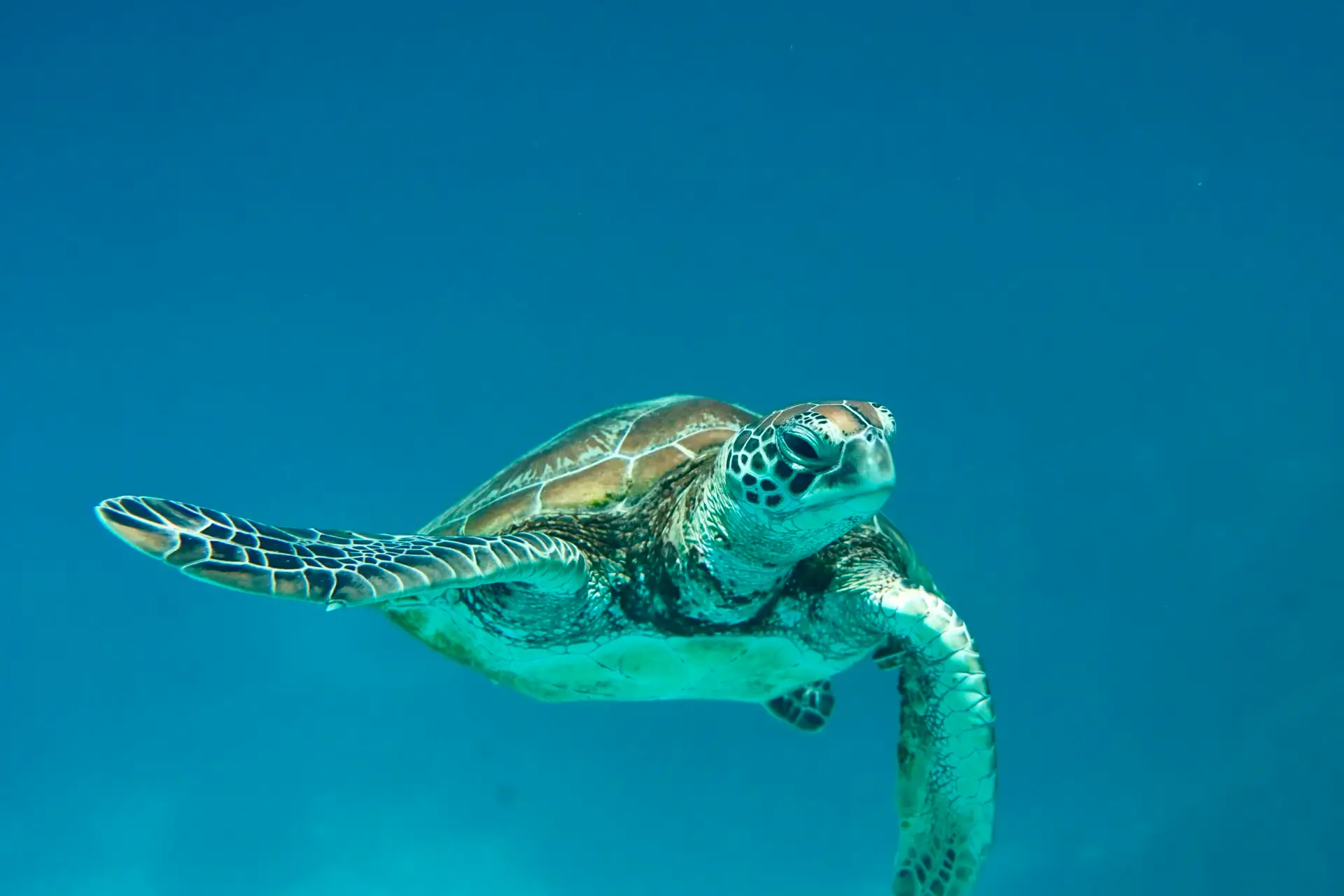
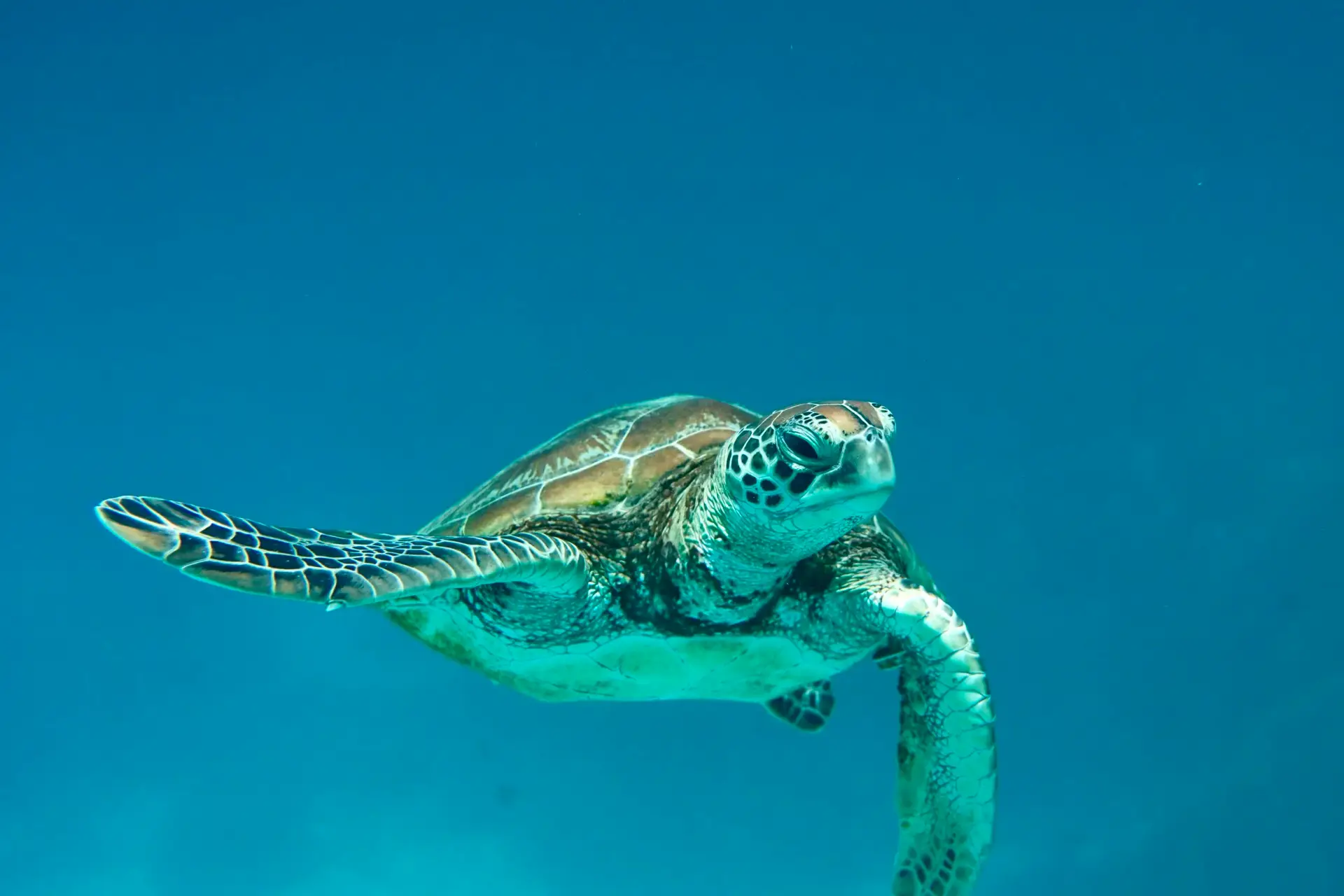
Green sea turtle swimming over the reef
Most common

Green Turtle

Chelonia mydas

The gentle grazers of the reef — and the one you're most likely to meet. Adults are largely herbivorous, one of the only sea turtles to eat mostly seagrass and algae, which tints their body fat green (hence the name).

  • Size: up to 1.2m, 130–160kg
  • Diet: seagrass & algae (adults)
  • Tell it apart: smooth, rounded head; one pair of scales between the eyes
  • Status: Endangered
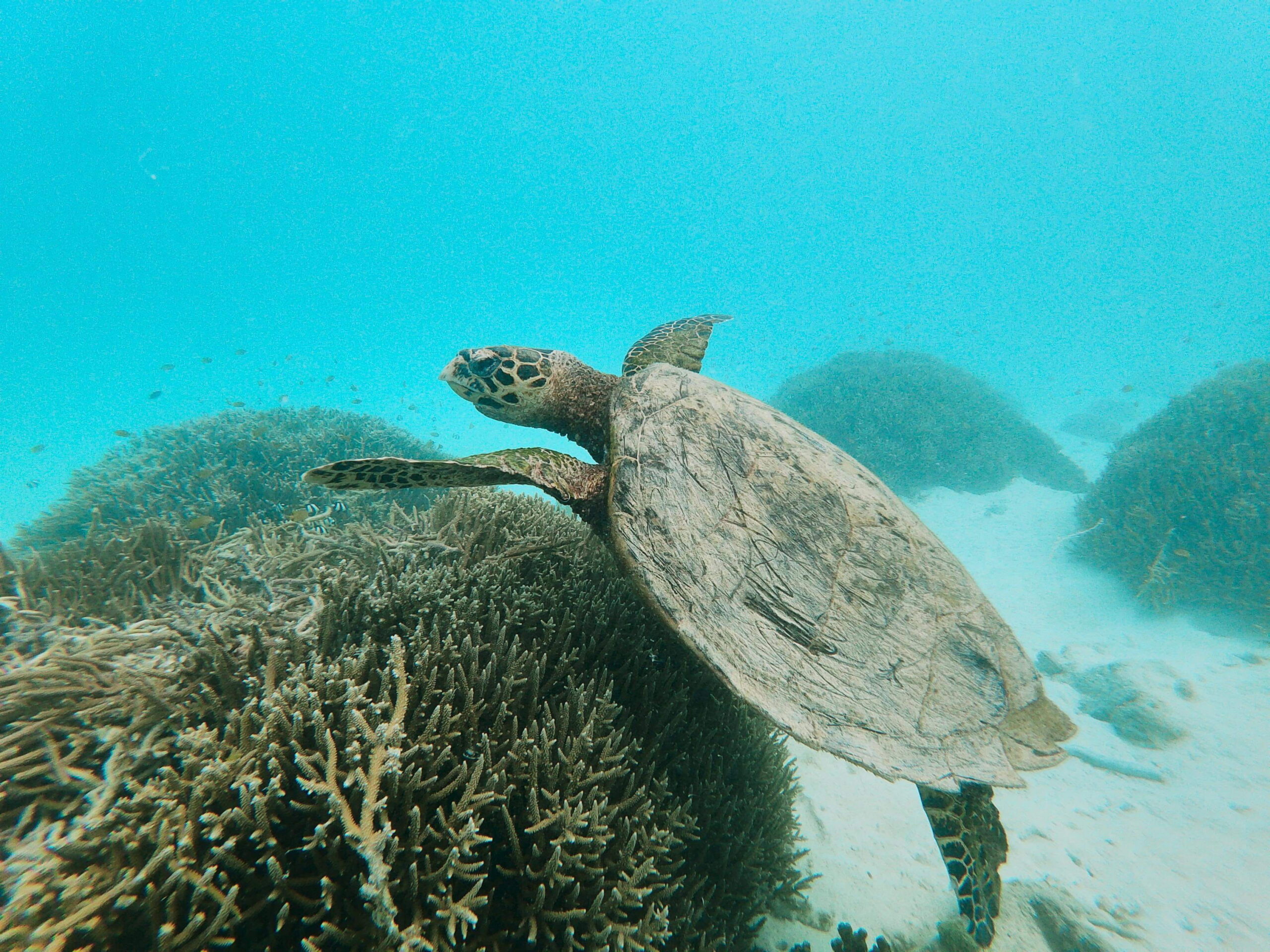
Hawksbill turtle on the reef
Reef jewel

Hawksbill Turtle

Eretmochelys imbricata

The reef's specialist — named for its narrow, bird-like beak, which it uses to reach sponges tucked into cracks and crevices. Its stunning overlapping "tortoiseshell" scutes once made it a target for hunters.

  • Size: up to 90cm, 45–70kg
  • Diet: sponges & small reef invertebrates
  • Tell it apart: pointed, hawk-like beak; jagged, overlapping shell edge
  • Status: Critically Endangered
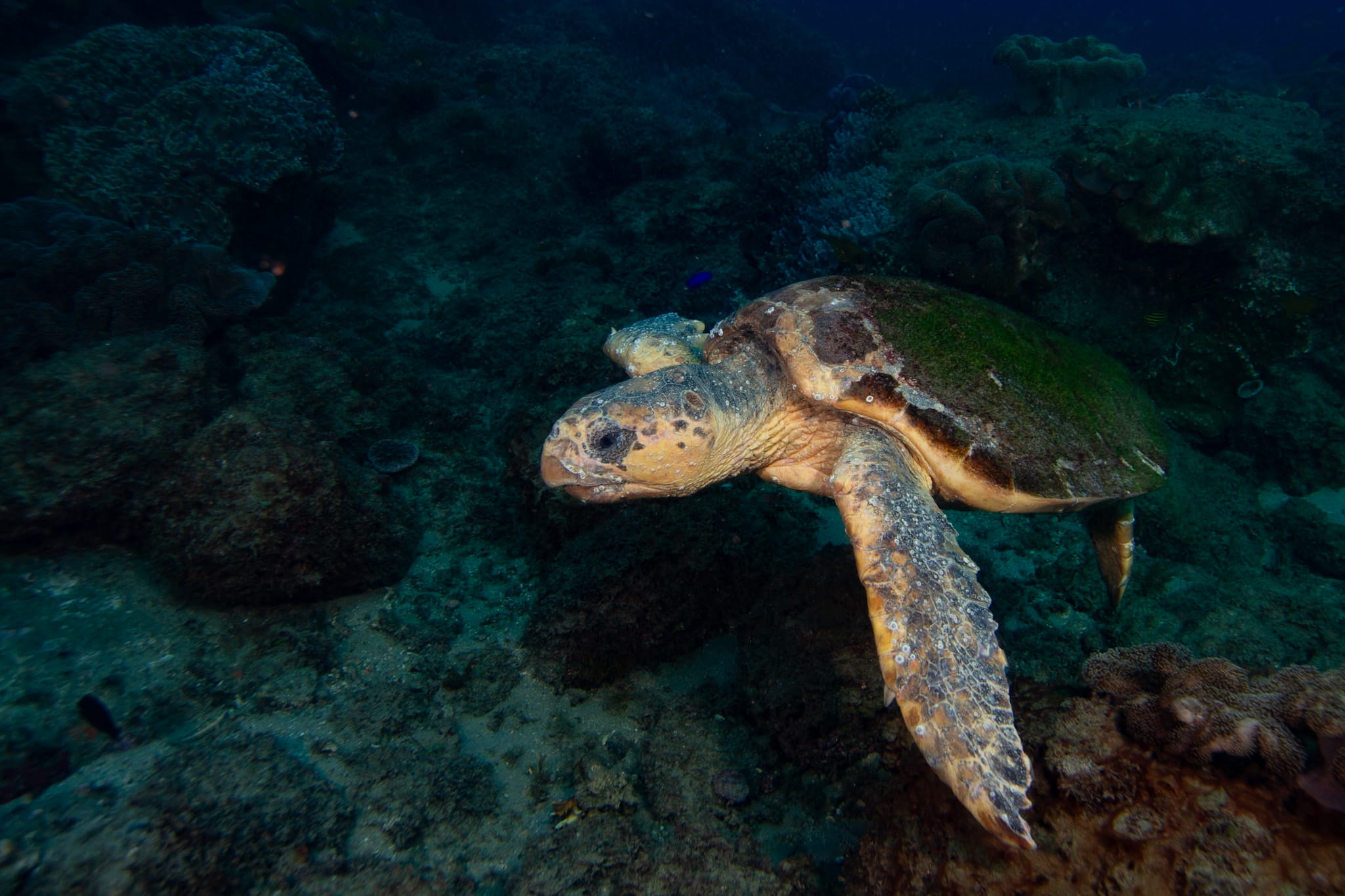
Loggerhead turtle resting on the sand
The powerhouse

Loggerhead Turtle

Caretta caretta

The heavyweight — the largest hard-shelled turtle in the world, named for its enormous head and powerful jaws that crush crabs, shellfish and jellyfish. Often seen resting on the sandy bottom.

  • Size: up to 1m, 90–135kg+
  • Diet: crustaceans, molluscs, jellyfish
  • Tell it apart: oversized blocky head; reddish-brown shell
  • Status: Endangered (east Australian population)
Built for the deep

How a turtle breathes underwater for hours

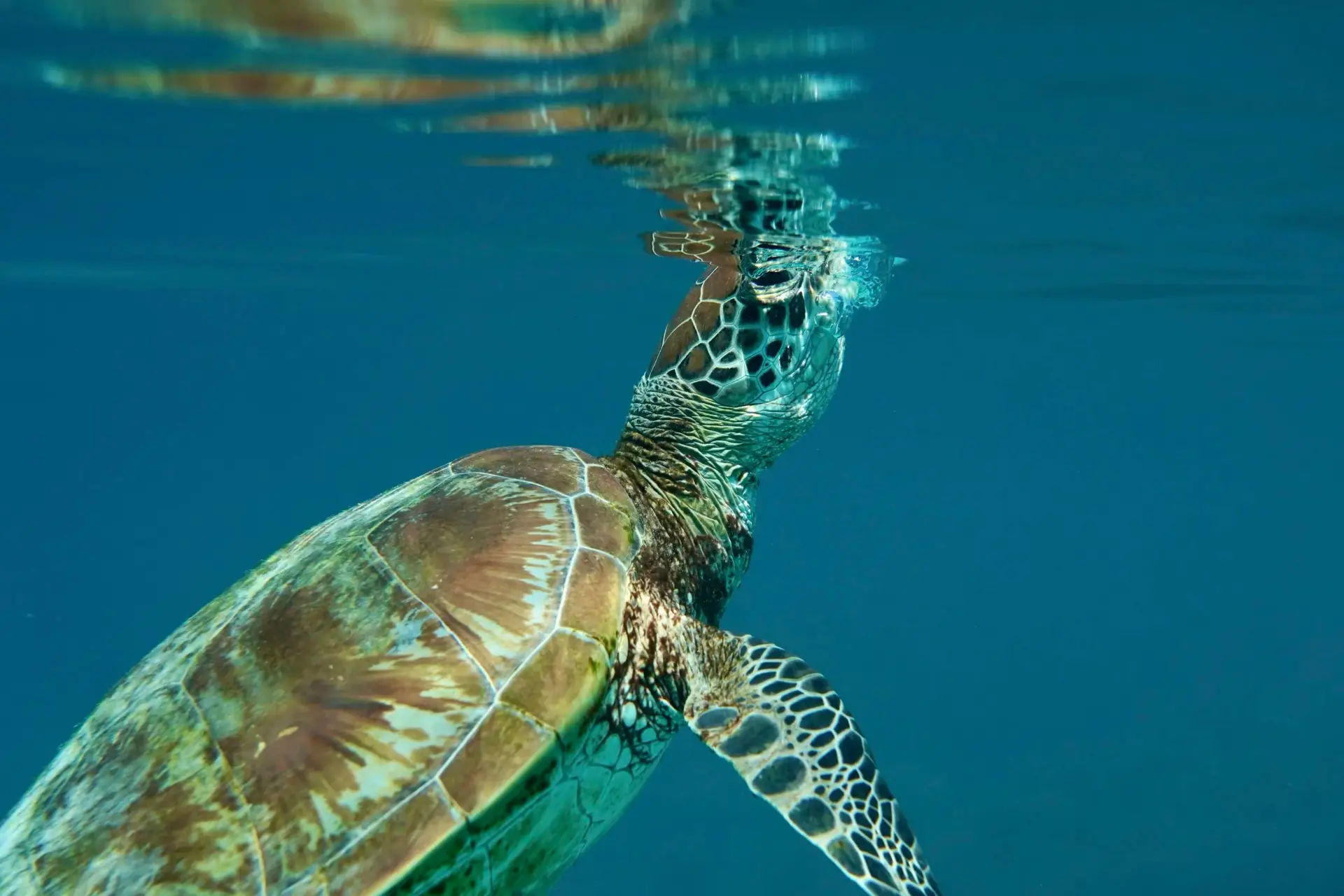
Sea turtles are reptiles — they breathe air, yet spend almost their entire lives beneath the surface. The secret is control. When active, a turtle surfaces every few minutes for a breath. But at rest, it can do something extraordinary.

A resting green turtle can stay submerged for up to five hours by dropping its heart rate to as low as one beat every nine minutes — slowing its whole body to sip oxygen. It's why you'll often find turtles simply parked on the reef, perfectly still, in no hurry to move.

Green turtle rising to the surface to breathe
🫁

Active vs resting

A few minutes between breaths when swimming — but hours when resting or sleeping.

🧊

Cold-blooded

Turtles are ectotherms: their body temperature tracks the water, so they bask and slow down to save energy.

🧭

A living compass

Turtles sense the Earth's magnetic field, navigating thousands of kilometres of open ocean.

What you'll see

Understanding turtle behaviour

Turtles live at their own unhurried pace. Knowing what each behaviour means makes every encounter richer. Tap a card to reveal more.

Grazing

Tap to reveal

Grazing

Green turtles crop seagrass and scrape algae from the reef, often for hours. It's the most peaceful sight — a turtle nose-down, completely absorbed in breakfast, unbothered by snorkellers keeping a respectful distance.

Resting

Tap to reveal

Resting

Turtles wedge themselves under ledges or rest on the sand, heart rate slowed right down, sometimes for hours. Hawksbills in particular tuck into coral overhangs. If you find a resting turtle, hover quietly and let it rest — it's a privilege to witness.

Surfacing

Tap to reveal

Surfacing to breathe

Every so often a turtle lifts gently to the surface, takes a quick breath, and glides back down. Give it a clear, open lane upward — never position yourself directly above a turtle, so it always has room to reach the air.

Cleaning station

Tap to reveal

Visiting a cleaning station

Turtles hold still at particular reef spots while small fish nibble algae and parasites off their shell and skin — a natural day spa. It's a cooperative relationship millions of years old, and one of the most fascinating behaviours to watch unfold.

Gliding

Tap to reveal

Gliding & cruising

With slow, powerful strokes of their front flippers, turtles "fly" through the water with astonishing grace. A cruising turtle is going somewhere on its own schedule — let it pass, don't chase, and it'll often glide close on its own terms.

Curiosity

Tap to reveal

Curiosity

Cook Island's turtles are residents, used to calm, respectful visitors — so they're often unfazed and sometimes genuinely curious, approaching to take a look at you. Stay calm and still; the closest encounters come to those who do the least.

An epic journey

The incredible life of a sea turtle

Few animals live a life as improbable as a sea turtle's. From a ping-pong-ball-sized egg buried in warm sand, to a decades-long odyssey across entire oceans — and, astonishingly, a return to the very beach where it hatched.

Green sea turtle at Cook Island
1

Nesting

A female hauls up a beach at night and lays a clutch of around 100+ eggs, then returns to the sea. The temperature of the sand decides the hatchlings' sex — warmer sand produces more females.

2

The dash to the sea

Weeks later, hatchlings erupt from the nest at night and scramble to the water, guided by the glow of the horizon — running a gauntlet of crabs, birds and fish. Only around 1 in 1,000 will survive to adulthood.

3

The "lost years"

Young turtles drift on ocean currents far out to sea for years — a phase so mysterious scientists call it the "lost years," feeding and growing out of sight until they're large enough to return to coastal reefs.

4

Reef life

Now the size you'll meet at Cook Island, they settle into a home reef — grazing, resting and growing slowly. Sea turtles take decades to mature (a green turtle can take 25–35 years).

5

The return

When ready to breed, adults navigate hundreds — sometimes thousands — of kilometres back to the region where they hatched, using the Earth's magnetic field, to begin the cycle again.

Ancient, and in trouble

Why sea turtles need our help

These animals survived the asteroid that wiped out the dinosaurs — but the last century has been their hardest. Every one of Cook Island's three species is threatened, and the pressures are almost entirely human.

Plastic pollution
A drifting plastic bag looks just like a jellyfish — a deadly case of mistaken identity.
Bycatch & nets
Turtles are accidentally caught and drowned in fishing gear around the world.
A warming world
Hotter sand skews hatchlings heavily female, and rising seas erode nesting beaches.

That's why a portion of every trip we run goes to Green Heroes — a Tweed Coast not-for-profit working on turtle conservation, threatened-species research, and giving more hatchlings a chance. Swim with them today, and help keep them here for the next generation.

Learn about our conservation work →
Share the water

How to snorkel respectfully with turtles

The golden rule: the reef is their home, and you're a guest. Follow these and the turtles will relax — giving you closer, calmer encounters.

✓

Look, don't touch

Never touch, ride or chase a turtle — it's stressful for the animal and illegal in a marine reserve.

✓

Give it space

Keep a couple of body-lengths back, and never crowd or corner a turtle against the reef.

✓

Leave the surface clear

Don't hover directly above — a turtle must always have an open path up to breathe.

✓

Float, don't flap

Slow, calm movement keeps turtles relaxed. The stiller you are, the closer they come.

✓

Reef-safe sunscreen

Ordinary sunscreens harm coral and marine life — choose reef-safe, and rinse off chemicals.

✓

Take only photos

Leave nothing behind, take nothing but memories, and never feed marine life.

Community-led protection

The Green Heroes Turtle Code of Conduct

As Cook Island (Jungarra Ngarrian) grows in popularity, our friends at Green Heroes developed a Sea Turtle Code of Conduct for Australian waters — a simple, community-led guide to interacting with turtles in a way that keeps them safe and stress-free. We follow it on every trip.

Read the Turtle Code of Conduct →
Green turtle gliding over Cook Island reef
Meet them for yourself

Reading about turtles is one thing…

…swimming beside a wild one is another entirely. Join us at Cook Island — resident green, hawksbill and loggerhead turtles, just 15 minutes off the Gold Coast.

Ready to meet them? snorkel with turtles on the Gold Coast — small-group tours depart Tweed Heads, no experience needed.