We don't just visit the ocean.We protect it.
Every tour we run funds real marine conservation at Cook Island — one of Australia's most important sea-turtle habitats.
Protecting Cook Island
Cook Island Aquatic Reserve is home to three species of endangered sea turtle. Our crew have been snorkelling and diving here for over 25 years — long enough to know every current, every reef, and exactly why this place is worth fighting for.
Tourism and conservation don't have to be in conflict. Done right, bringing people face to face with wild sea turtles is one of the most powerful tools we have for building the next generation of ocean advocates.
That's the idea behind everything we do — from small-group tours and education programs to our partnership with Green Heroes, a not-for-profit conservation organisation based right here in Fingal Head.
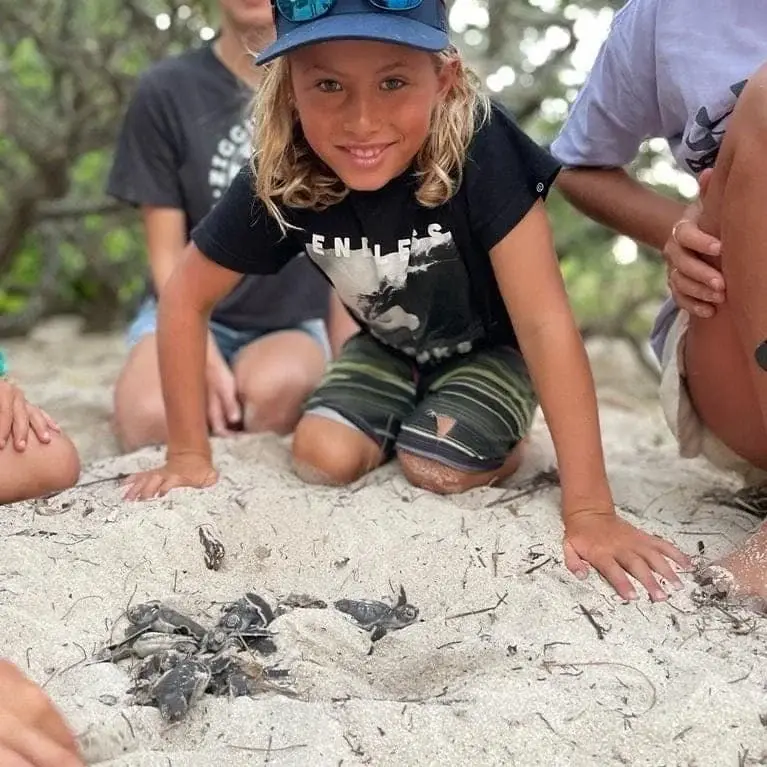
Three species. One protected reserve.
Cook Island (Jungarra Ngarrian) is an important cultural site for the Bundjalung people and a critical habitat for sea turtles on Australia's east coast. Green, hawksbill and loggerhead turtles all call this reef home — a level of diversity that is genuinely rare.
Green turtle
The most commonly spotted species at Cook Island. Green turtles graze on seagrass beds and play a vital role in keeping reef ecosystems healthy — and can live for over 80 years.
Hawksbill turtle
Named for their distinctive narrow beak, hawksbills are critical to coral-reef health — feeding on sponges that would otherwise smother the coral. Globally one of the most threatened sea turtles.
Loggerhead turtle
The largest of the three species at Cook Island, loggerheads are powerful hunters of hard-shelled prey. Critically endangered — which makes every sighting here significant.
Conservation in practice
It's easy to say you care about the ocean. Here's what that looks like in practice.
Responsible wildlife tourism
Small groups, trained guides and a strict code of conduct. We operate with the reef's long-term health as the non-negotiable — not visitor numbers. Our small-group cap exists for a reason.
Threatened species monitoring
We assist Green Heroes with ongoing monitoring of threatened species within the Cook Island Aquatic Reserve, contributing to long-term population data for green, hawksbill and loggerhead turtles.
Contributing on every trip
Our guests don't just observe — if they'd like to, they can help. We collect turtle ID data, reef-health observations and wildlife sighting records, and share it all with Green Heroes' monitoring programs.
School & community education
We run school programs and community events that connect young people directly with marine conservation — because tomorrow's ocean defenders are in classrooms today.
Green Heroes
Green Heroes is a not-for-profit conservation organisation based in Fingal Head, NSW — the same stretch of coastline we've called home for 25 years. They're the conservation arm behind much of the on-ground work we support.
Through Green Heroes, guests, volunteers and community members can go beyond a single tour and get involved in long-term marine protection — contributing real time, skills and energy to protecting this coastline.
Our snorkel courses, conservation events and volunteering programs are all run in partnership with Green Heroes.
Volunteer for Green Heroes
How to share the water with wildlife
Cook Island is a protected aquatic reserve. We take responsible wildlife interaction seriously — not as a legal box to tick, but because we genuinely care about the animals we share the water with. Every guest is briefed before entering the water.
Never touch
Turtles are wild animals. Touching causes stress, damages the protective coating on their shell and disrupts natural behaviour. Observe — don't interact.
Don't chase or approach from above
Let turtles come to you. Approaching from above mimics a predator and makes them flee. Stay horizontal and move slowly.
Avoid flash photography
Flash disorients turtles and can affect their navigation. Natural light is best — and the results are far better anyway.
Keep a respectful distance
Give turtles at least 2 metres of space. If one approaches on its own terms, stay still and enjoy the moment.
Nothing in, nothing out
Leave the reef exactly as you found it — no shells, coral or sea life removed, and no sunscreen, food or waste introduced into the water.
Respect the reserve
Cook Island is a cultural site for the Bundjalung people. Enter with care and gratitude — it's a living ecosystem that was here long before us.
Turtle snorkel guide by Green Heroes
Conservation doesn't stop when guests enter the water. Our ocean guides demonstrate the turtle code of conduct on every single tour — showing guests firsthand how to share the reef responsibly with endangered wildlife.
Come and be part of something bigger
Every tour supports the conservation of Cook Island. Book a snorkel, join as a volunteer, or get in touch to find out how your group can get involved.
Ready to meet them? swim with wild turtles on the Gold Coast and help protect the reef you visit.